Wed, Nov 04
|Online event
Quilts of War
Ready to explore incredible stories stitched into fabric? Quilts of War is an online event where creativity meets history. Dive into powerful tales told through quilts in this speakers series. Whether you're a quilting fan or just curious, this event is sure to inspire and connect you with a passio
Time & Location
Nov 04, 2026, 2:00 p.m. – 3:30 p.m. AST
Online event
About the event
This Speakers Workshop features 3 speakers and is followed by a 30 mins. Q & A session. We are pleased to announce that our speakers for this event are Heather Smith, Joanna Darmenjian and Lucie Heins.
Heather Smith- The Other Front: The Emotional Meaning of First World War Fundraising Quilts
Abstract:
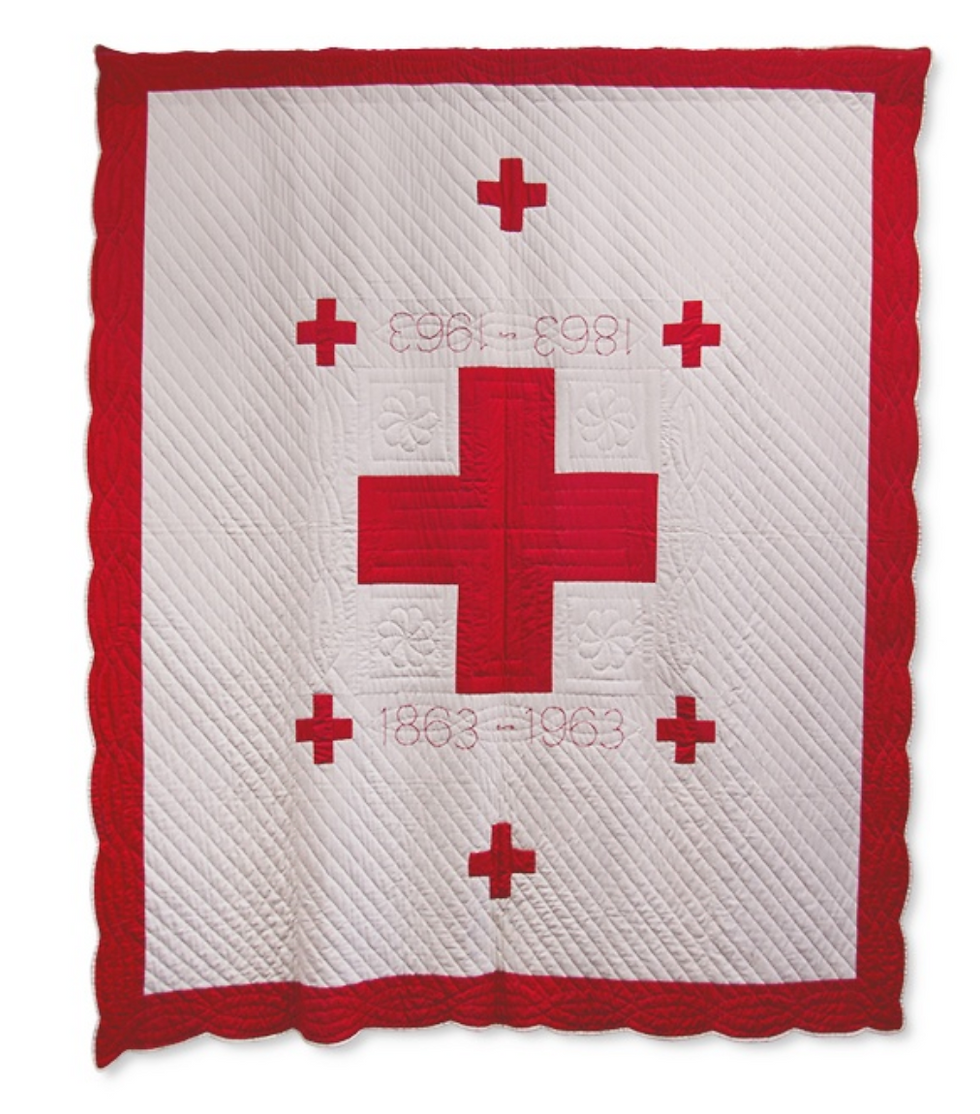
During the First World War, Canadian women produced thousands of red and white, signature, fundraising quilts to support the war effort. These quilts have often been understood primarily as examples of patriotic fundraising made to support the Red Cross. They were made coast to coast, they did raise a considerable amount of money, and many women’s groups were involved. This presentation explores a different question: what did these quilts mean to the women who made them, and what meanings did they have for the hospital staff and patients who received them overseas? Drawing on letters, diaries, and newspaper accounts, this paper examines fundraising quilts as emotional objects that connected Canadian communities with those serving overseas. For the women who organized, embroidered, stitched, and exhibited these quilt projects, the activity represented more than a means of raising funds. Quilting, and other crafts, offered familiar women a means by which they could fight the war on the home front. They also believed their war work changed social roles, repaid a debt of gratitude to the soldiers, ‘calmed the nerves’, and intended their hand made objects to symbolize care and good wishes. All of which meant women transformed household labour into a meaningful contribution to the national war effort. Evidence from hospitals in Britain and France reveals that recipients also understood these quilts as more than practical objects. The signatures stitched into the fabric created a powerful connection to home. For soldiers far from Canada, the names represented the people and communities who remembered them, while also recalling identities that existed before the war—as sons, daughters, neighbours, and friends living ordinary lives before military service transformed their experiences. The quilts offered not only warmth and comfort but a tangible reminder of relationships and memories beyond the battlefield. By examining both the making and receiving of fundraising quilts, this paper argues that these objects were not simply products of wartime patriotism or fundraising. They were emotional communications that expressed deeply meaningful connection between communities at home and those experiencing the realities of war.
Bio:
Heather Smith holds a Bachelor of Fine Arts degree from the University of Victoria, a Master's Degree in art history & museum studies from Virginia Commonwealth University, and is currently a PhD Candidate in history at the Western University. She is writing her dissertation about First World War women in Canada raising money using red and white, signature or autograph quilts. She is a curator and museum professional that has contributed to curatorial exhibitions and from Yukon to Nova Scotia. Her curatorial work, undertaken over a long career, has explored a range of interconnected themes, including contemporary and historical craft, war art and wartime craft, material culture, and the lives and work of women artists and craftspeople. From 2016 to 2019, her exhibition Canadian Keepsakes of Conflict: Trench Art & Other Canadian War Related Craft, travelled across Canada including to the Military Museums, (formerly the Museum of the Regiments) in Calgary, Alberta. This exhibition expanded on the idea, first expressed by Nicholas Saunders, a British material-culture historian, that trench art can be defined as any craft associated war either directly or peripherally. Using this perspective, she has also examined red and white quilts created by women for community or war-related fundraising purposes. This line of inquiry has led to two recent quilt exhibitions at the Waterford Heritage Museum in Ontario: Red & White Quilts of Southwestern Ontario, a 2025 exhibition that included 53 quilts borrowed from 12 public and private collections, and Quilting for a Cause: The Red Cross Quilts of the Great War, an exhibition which was co-organized with James Christison and also travelled to The Military Museums, Calgary, AB, 2019. Another defining thread in her work is the sustained attention to the creative lives shaped within Canada’s smaller, rural communities. Places such as Dawson City, Yukon; Moose Jaw, Saskatchewan; and Port Rowan, Ontario (all places Heather has lived) exemplify how distinctive artistic and craft traditions emerge from the interplay of landscape, local history, and the realities of limited resources or outside influence. In these settings, the relationship between art, craft, history, and community takes on a particular richness and complexity that is often collaborative and essential to everyday life.
Heather lives in an 1840's Georgian style brick house near Port Rowan, Ontario.
Joanna Darmenjian- Textile Production by Canadian Women on the Home Front in the Second World War.
Abstract:
Researching a topic on which little has been written has its challenges. Researching a topic which has little presence in the historical record has these challenges compounded. When the topic is about women, women in wartime, women’s unpaid labour on the home front in wartime, women’s unpaid work which utilized their generations-old domestic skills to produce necessary hospital, military and civilian supplies in textiles, the resources that provide the historical record are not obvious and not readily available.
This labour was performed all across Canada between 1939 and 1945, in large cities and remote hamlets and every place in between; for the most part, it was not recorded, or the records were not retained after the war, not deemed important or relevant. The work was done by existing
women’s organizations and newly formed organizations, but also thousands of church groups, home groups and school classrooms.
The everyday domestic lives of women have always received little scholarly attention. Uncovering a vast production over six years, across a distance of thousands of miles, required innovative exploration. And the story is not just contained in Canada, but also in Britain in Europe. The stories reside in women’s groups, in the communities of makers, in oral histories, in remote archives and in primary sources. To understand the breadth of the production, individual stories must be pieced together like a quilt top. Writing about the meaning and relevance of this production is much akin to the layering of a quilt.
This presentation outlines the process by which I investigated the story of the textile production by Canadian women on the home front in the Second World War. By joining a local quilt guild to learn how to hand quilt, making public presentations to quilt guilds and museums, creating a website and blog and most importantly creating Instagram and Facebook Groups to form communities for sharing and conversations, hidden stories of women’s voluntary labour have emerged and enabled me to continue to investigate this story.
Bio:
Joanna Dermenjian holds a Master’s degree in Cultural Studies from Queen’s University and a BA in Art History from Western University. Joanna is an independent researcher, lecturer, and quiltmaker investigating the cultural history of textiles, with special interest in Canadian women’s voluntary production of textiles for the war effort on the home front during the Second World War.
Hundreds of thousands of quilts were produced by women and children and donated through the Women’s Voluntary Service (WVS) for distribution to civilians, hospitals, and soldiers in Britain and Europe. Joanna’s work examines these quilts not only as historical artifacts but also as material traces of care, community, and sustained collective effort, highlighting the emotional and social labour embedded in their production.
Lucie Heins- Canadian Red Cross Quilts
Abstract:
In 2005, Maxine March, Jackie Maxwell & Anna Mansi, members of a quilt group in Bromley, Kent, England, heard a talk about quilts that had been made by Canadian women during the Second World War and sent by the Canadian Red Cross to the UK as part of the civilian relief. This talk prompted them to set up the Canadian Red Cross Quilt Research Group (CRCQRG). In the following 18 years, the group documented over 200 quilts and formed a collection of more than 100 quilts. Having realized all their original aims, their main concern was how to return them to Canada.
In the summer of 2022, Maxine informed Lucie Heins, Assistant Curator at the Royal Alberta Museum that she and Jackie were ready to begin the discussions of returning their quilts to Canada. Heins will address the challenges and successes of the year-long process of placing these 64 quilts in institutions throughout Canada and their importance to capturing Canadian women's home front contribution during the war.
Bio:
Lucie Heins, recently retired, was the Assistant Curator for the Daily Life & Leisure program at the Royal Alberta Museum for 16 years. She has her BSc. and MA in Human Ecology, majoring in clothing and textiles. Lucie has worked on projects at the Textile Museum in Washington DC, and in Haifa, Israel, attending to the textile collection at the Baha’i World Centre under the care of the Department of Holy Places.
Lucie is the author of the book, Alberta Quiltmakers and their Quilts, addressing the gap in Canadian literature on the history of Alberta quilts. She spent seven years documenting and researching 19th and 20th century quilts found throughout Alberta. Most recently, in 2023, Lucie worked with the Canadian Red Cross Quilt Study Group in England to facilitate the return of 64 Second World War Canadian Red Cross quilts back to Canada from England.